
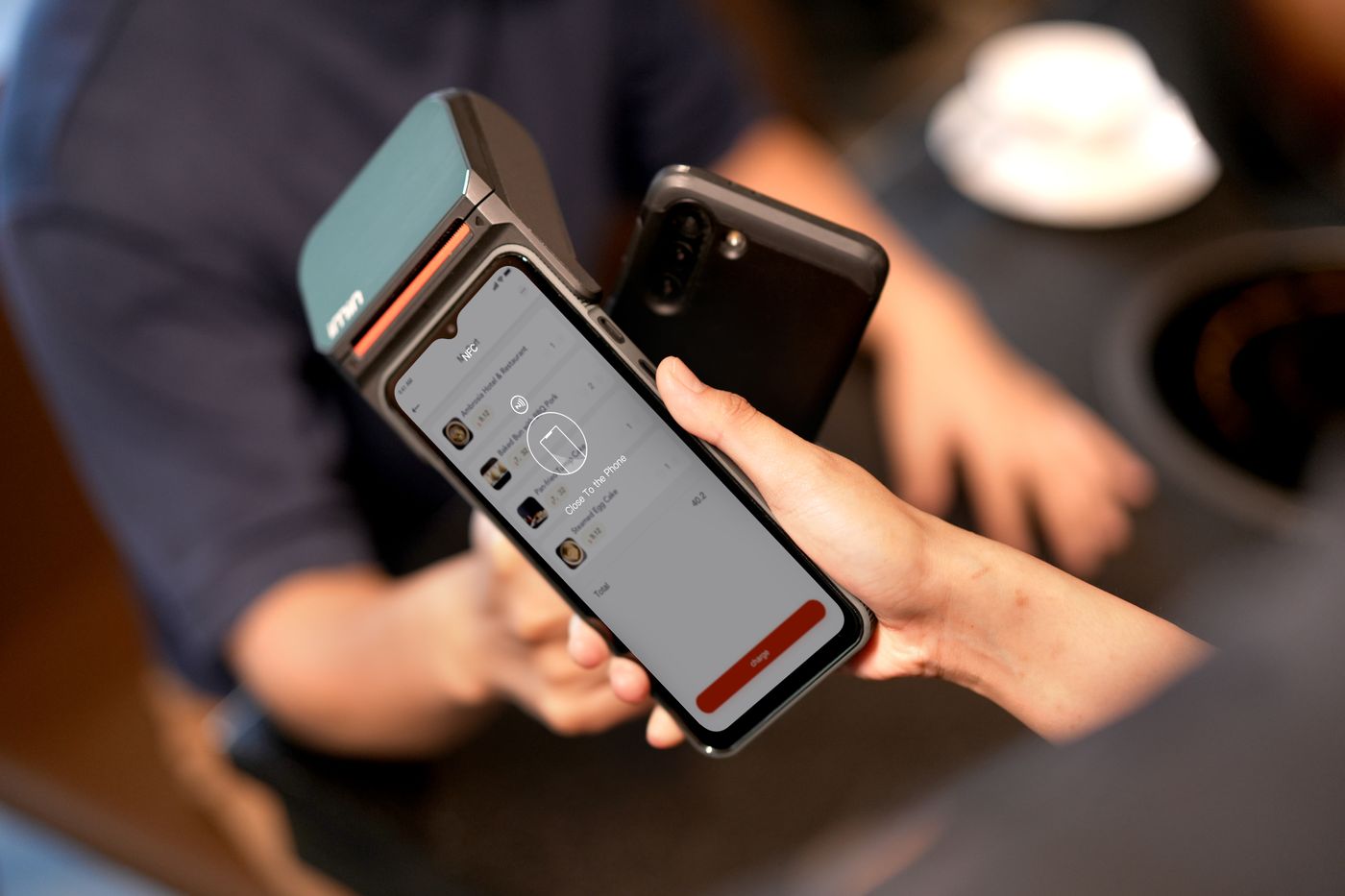
How NFC Tap Technology Works Without the Jargon
NFC stands for Near Field Communication. It is designed for very close interactions, usually a few centimetres from the phone, and it powers everything from contactless payments to transit cards to tap-to-share business cards. The technology sounds complex, but the idea behind it is simple once you ignore the acronyms.
Quick answer
NFC stands for Near Field Communication. A business card holds a tiny passive chip with no battery. When a phone comes within a few centimetres, the phone's own radio field powers the chip, the chip sends back a small piece of data — usually a web link — and the phone opens it. The whole exchange takes a fraction of a second and works only at very close range, which is part of what makes it feel deliberate and secure.
The card has no battery
Most NFC cards are passive, which means they contain no battery and no power source of their own. Inside is a small chip connected to a thin antenna loop. The chip does nothing until it enters an active NFC field. When you bring a phone close, the phone generates a short-range electromagnetic field, that field induces a tiny current in the card's antenna, and that current is enough to wake the chip and let it respond. This is why an NFC card can sit in your wallet for years and still work instantly — there is nothing to charge or run down.
The data is usually just a link
For business cards, the chip almost always stores a URL — a web address that opens a digital profile or action page. It is a very small amount of data, which is why the exchange is so fast. The phone reads the link and offers to open it, and the profile loads in the browser like any other page. Because the card only stores a pointer, the actual content can be changed at any time on the web, without touching the card. The chip says where to go; the web decides what is there.
Short range is a feature, not a limit
NFC works only at a distance of roughly four centimetres or less. That sounds restrictive, but it is exactly what makes the interaction feel safe and intentional. You cannot accidentally trigger an NFC card from across a room, and someone cannot quietly read it from a distance. The user has to physically choose to tap, which makes the action deliberate and controlled. The same short range is why contactless payments require you to hold your card or phone right against the terminal.
Why tapping feels instant
Because the data is tiny and the chip needs no boot-up, the read happens in a fraction of a second. There is no pairing step like Bluetooth and no network handshake — the phone simply reads the stored link and acts on it. The only delay you notice is the web page loading afterwards, which is why a fast, lightweight profile matters so much. The tap itself is effectively instant; everything you can control about speed lives in the page that opens.
Frequently asked questions
Does an NFC card need to be charged?
No. Passive NFC cards have no battery. The phone's field briefly powers the chip during the tap, so the card works indefinitely with no charging.
How close does the phone need to be?
Very close — roughly four centimetres or less. NFC is intentionally short-range, which is part of what makes it feel deliberate and secure.
Is NFC the same as Bluetooth?
No. NFC is much shorter range and needs no pairing. It reads a small amount of data in a fraction of a second, whereas Bluetooth maintains a longer connection over a greater distance.